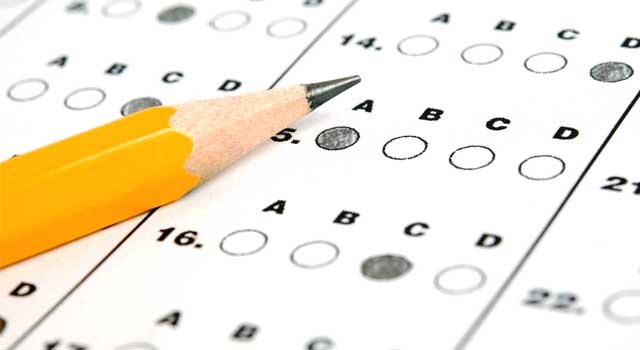
Sleep well, study well.

(for the first Science of Learning post that deals with Brain Rules, see Imagine a future with no homework.)

Rule #7 in Brain Rules (a fascinating science book by John Medina) bears the title “Sleep well, think well.” The first principle involved in rule #7 is this:

“When we’re asleep, the brain is not resting at all. It is almost unbelievably active! It’s possible that the reason we need to sleep is so that we can learn.”

Very strong, active language in the first half of that quote, but passive in the second: it’s possible?? Well, guys, funny thing: science has yet to ever nail down and agree upon any definite reason why we need sleep. That’s strange, right? That we don’t know why, exactly, our bodies need something we supposedly spend 8 hours a night and 1/3 of our life involved in? (The 8-hours-of-sleep-a-night rule that we hear and refer to all the time turns out to be a myth with humble beginnings and no research behind it, which is another strange thing. But, as the Brain Rules website says in its main points about sleep, “We still don’t know how much we need! It changes with age, gender, pregnancy, puberty, and so much more.”)

There are some creatures on this earth that have very strange ways of sleeping—the bottlenose dolphin puts one side of its brain to sleep for a few hours and uses the other half to keep swimming. Bullfrogs rest but they never sleep. But we humans, poor things, we can’t do without it. As Rule #7 says, “Loss of sleep hurts attention, executive function, working memory, mood, quantitative skills, logical reasoning, and even motor dexterity.”

You know those secret prisons that Obama recently ordered shut by executive order? We’re now freed up to imagine all sorts of horrible things went on in these places—very loud, painful, Jack Bauerish encounters between prisoners and guards. We won’t do that in this space because it’s completely off-topic. But this is only mostly off-: if you were Jack Bauer and you had to get vital information from a prisoner, you could threaten to deprive him of sleep.

And of course our brains go to pot when we don’t get sleep. Like, literally, really … you ever pulled an all-nighter before a test? I did it many times as a foolish undergrad, in many classes, especially the bigger, boringer classes where your grade in the class was almost entirely determined by your grade on the final. So you don’t study. Rather, I don’t study, at least I didn’t, not more than incidentally, over the entire course of the quarter, until about 2 weeks left before the final—this was when I’d start laying my plan for learning a term’s worth of information over the course of a few days, for a few different classes. Come finals, I’d end up with 3 or 4 all-nighters in the space of a week, and only snatches of sleep on the other nights; but the tests would get done and passed in good order.

The problem with this approach is that it works. At the time, I thought that all professors grading on the curve was the main culprit—right before a test, most students in a class are frantically cramming the relevant information into their heads, which works more or less the same across the board, so most students end up grouped roughly together in terms of scores, and via a curve grading system, they mostly pass the test comfortably. (My all-time favorite college test score: I got 35% on the final in computer-integrated calculus, which the curve translated into a C+.)

But the other problem, the real problem with pulling all-nighters is that you don’t remember anything you learn whilst the all-nighter is being pulled. As it turns out, the brain uses sleep to consolidate the memories of new things you’ve learned that day—the fancy images neuroscientists can take of the brain now tell us that the brain—your brain—repeats new information during different phases of REM sleep. And, if you don’t get sleep after learning something, you won’t remember it later. Now, you might remember it on the test, the next day, but the new information won’t get firmly designated for long-term memory storage, and by the 2-week mark, you won’t remember any of it. (One fun memory fact: if you learn something new and remember it 2 weeks later, you’ll likely remember it a year later, too—2 weeks seems to be a rough threshold for long-term storage.)

Here’s a bit of anecdotal proof. In my sophomore year of college I took a class about Post- World War II American history, which I was actually excited about, at the start, because no history class I’d taken ever in my life had made it past WWII. But class was early, 8am, and I was 20, and my attendance was … spotty, let’s say. I went a few times. But anyway, the grade boiled down to your scores on the mid-term and the final, both of which I pulled multiple all-nighters for and did relatively well … I got a B+ in the class, which is fine. Decent. So now it’s years later, but I’ve actually grown more and more interested in American history since then, so I have had an internal reason to hold onto the stuff I learned back then.

How much stuff? Well, I remember that the suburbs were invented after the American troops came home from World War II and THAT IS IT. THAT’S ALL I REMEMBER from a class on a subject I actually enjoyed, at least passively.

You need to sleep to learn. If you’ve had a big day of learning, get good sleep that night, because if you don’t, everything you learned will evaporate. If you’re in school—and especially if you’re studying something you like, or that will translate into skill you’ll use professionally—don’t deprive yourself of sleep. It’s crucial. Not just to feeling rested, but to actually retaining and long-term remembering information that will be useful to you later.

Coming soon: More stuff on sleep!! Why so enthusiastic, you ask? Because we’re going to convince you that naps are one of the most awesome things you can do to make yourself smarter.

Leave a Reply

You must be logged in to post a comment.